

How to Choose the Right Pram in Australia: Myths, Safety & Expert Advice
Buying a pram is one of the most important decisions you will make with a newborn. You’ll use it daily, so the right choice should be easy to fold/unfold, light enough for you, suited to your terrain, compact enough for your boot and groceries. The wrong choice leads to frustration, back strain and wasted money.
Friends and relatives mean well, but the ideal pram for them may not suit your car, home, budget or lifestyle. Large multi-store retailers also sometimes repeat myths that don’t line up with standards or real-world use. Below we bust the common myths and share practical, Australian-specific guidance.
If you’re unsure which type of pram best suits your lifestyle, car boot size, walking terrain or budget, our free Pram Finder can help narrow the best options for your family.
Myth 1: “Any three wheel pram is a jogging pram.” 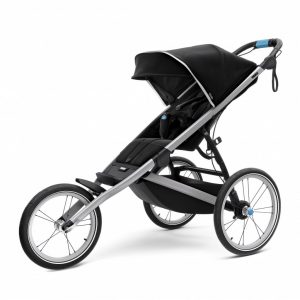
Incorrect. While true running and jogging prams are three wheelers, not all three wheel prams are designed for running. A genuine running pram typically has a fixed or lockable front wheel that stays stable at speed, a hand brake, a robust park brake, larger wheels and specific bearings, tuned suspension and a stronger frame.
Using a non-running model for jogging can be unsafe. A good example of a true running pram is the Thule Glide series.
Myth 2: “Three wheel prams are unstable.”
Not inherently. Any poorly designed or overloaded pram can tip. Stability depends on centre of gravity, wheelbase, frame design and correct use, including how and where you load bags. Many quality three wheelers are as stable as, or more stable than, some four wheelers.
Myth 3: “Newborns must lie perfectly flat in a pram at all times.”
There is no Australian law stating newborns must be fully flat in a pram at all times. Practical guidance is to support the head and keep baby in a safe, reclined position with good airway alignment, and to avoid long stretches in the pram without breaks, commonly referenced as around two hours at a time.
Always follow your pram or bassinet manual and safe sleep guidance for portable sleep away from the cot.
 Myth 4: “It’s perfectly safe to hang your nappy bag over the handlebars.”
Often not recommended. Unless your manual explicitly allows it, don’t hang heavy bags on the handlebar. It can reduce stability and cause rearward tip-over. Many brands advise placing loads in the basket and using approved accessories instead.
Myth 5: “Pram bassinets can never be used overnight.”
Sometimes they can. Some manufacturers design specific pram bassinets for overnight sleep when used correctly, often on an approved stand with a firm, well-fitting mattress and adequate ventilation.
Always check the manufacturer’s guidance carefully. For example, UPPAbaby offers bassinets rated for overnight sleep when used as directed.

Myth 6: “Small prams are no good.”
Depends on your lifestyle. Travellers and city families often benefit from compact, lightweight prams. If you’re mostly walking parks and rougher paths, larger wheels and suspension may suit you better.
Storage size matters for some families, but not all. Choose what fits your daily routine, car and terrain.
Myth 7: “Only expensive prams are safe and practical.”
No. While premium prams can add features, engineering and premium materials, you don’t need to spend thousands for a safe and practical pram.
At the same time, ultra-cheap models from general retailers may not hold up well over years or multiple children. The smart approach is choosing a well-built, standards-compliant pram that suits your lifestyle and is backed by a retailer who can support you long term.
How to Choose the Right Pram (Quick Checklist)
- Fit & fold: Try folding and unfolding in-store. Check it fits your boot with groceries and leaves room for a capsule if needed.
- Weight & lift: Practice lifting the chassis and seat safely. If it strains you in-store, it won’t feel lighter in the car park.
- Terrain: Paths and shops? A compact four wheel or agile three wheel may be ideal. Parks and trails? Larger wheels and suspension help.
- Newborn options: Does it offer a parent-facing seat, bassinet or recline suitable from birth according to the manual?
- Safety features: Reliable brake, five-point harness, secure fold lock and no pinch points.
- Accessories: Basket capacity, rain cover, sun protection and capsule compatibility.
If you’re still unsure which pram best suits your lifestyle, boot size and daily routine, try our free finder tool to compare the best options for your needs.
Australian Standards & What They Mean for You
Quality prams sold in Australia are designed with AS/NZS 2088 (Prams & Strollers) in mind and must meet applicable Australian Consumer Law requirements.
In practice, that means:
- Stable design
- Effective parking brakes
- Secure harness systems
- Safe folding and locking mechanisms
- Clear instructions for safe use
Always follow the manufacturer’s manual for weight limits, loading instructions and approved accessories.
My Advice on Choosing a Pram
The most important thing to remember is that everyone’s needs are different. Don’t rely solely on a friend’s favourite pram. Your boot, your terrain, your budget and your daily routine are unique.
Speak with an independent baby store with trained specialists who will ask the right questions and help match a pram to your lifestyle.
You can also read my article on avoiding the “five prams per child” trap here.
At Bubs n Grubs, we have a great range of prams and strollers. We, the owners (Judy and myself), hand-pick each product based on what our combined experience of over 38 years and more than 20 years in this business has taught us.
We’ve learned from thousands of conversations with parents about what actually works in real life. Our product specialists can help in-store or over the phone to make sure you choose right the first time.
Click the button below to see the range, or contact us if you’d like personalised help with boot tests, fold demonstrations and capsule compatibility.
See you online or in store soon!
Frank
Standards & Guidance (Australia)
- Product Safety Australia – Prams & Strollers Safety (AS/NZS 2088)
- Using your pram or stroller safely – set-up, brakes, loading and supervision
- ACCC – Consumer guarantees (repairs, replacement, refunds)
- Red Nose – Safe Sleeping (portable sleep guidance)
FAQs
Are three-wheel prams safe?
Yes - if well designed and used as directed. Stability depends on wheelbase, frame design and loading. Avoid hanging heavy bags on the handlebar unless the manual allows it.
Can I jog with any three-wheel pram?
No. Only use a pram designed and specified for running, typically with a fixed or lockable front wheel and a hand brake. Check the manual.
Is it okay to hang my nappy bag from the handlebar?
Not unless your pram allows it. Use the basket or approved accessories. Heavy bags on the handlebar can cause tip-over and may void warranty.
Can a pram bassinet be used for overnight sleep?
Only if the manufacturer states it’s suitable and when used as directed, often with an approved stand, firm well-fitting mattress and good ventilation. Otherwise, use a safe, dedicated sleep space.
How do I know if a pram will fit my car?
Bring your car to the store. We’ll demonstrate the fold, lifting and boot fit while considering your capsule and everyday storage needs. This helps avoid surprises later.
Safety Disclaimer
This content is general information for Australia. Always follow your pram or stroller instruction manual and relevant Australian guidance. Use the parking brake, keep cords and loads away from the handlebar unless approved, and supervise children at all times.
About the Author
Frank is a founding owner of Bubs n Grubs. He is also the sole author of the Bubs n Grubs Baby Blog. He has been personally evaluating baby products & testing them before offering them to our customers since 2006. In addition, he is consistently giving manufacturer’s feedback & product development advice, reviewing & getting customer feedback. He has been doing this since the business started in 2006. He is proud to be one of the rare baby store owners who regularly engages with customers in store. Frank values the constant feedback and regularly seeks it out. He has been featured on the Morning Show & the Today Show on Channel 7 and Channel 9 and is a recognised expert in baby products as a result.
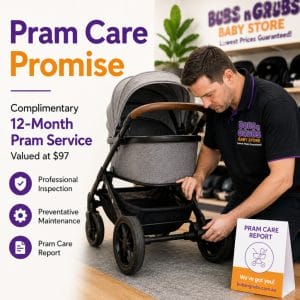
Helping You Protect Your Pram Long After You Take It Home
Helping You Protect Your Pram Long After You Take It Home For many families, a pram is one of the most frequently used baby products they’ll ever own. It gets folded in and out of the car, pushed across shopping centres, parks, gravel paths, footpaths and often travels thousands of kilometres during its lifetime. Like
Read more...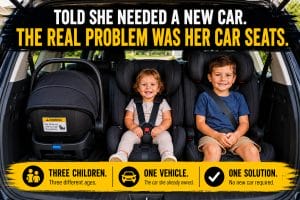
The Car Seat Mistake That Almost Cost One Brisbane Mum a New Car
A Brisbane mum with three young children came to us seeking a second opinion after being told she would likely need to buy a larger vehicle to fit three child restraints safely. The problem was she couldn’t afford one. Like many Australian families, she was already feeling the pressure of rising living costs. The thought
Read more...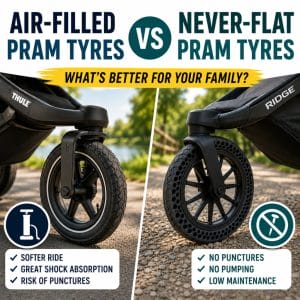
Air-Filled vs Never-Flat Pram Tyres: What’s Better for Australian Families?
Air-Filled vs Never-Flat Pram Tyres – What’s Better for Your Family? Most parents spend time comparing suspension, fold size and basket space when choosing a pram, but very few think about the tyres until after they start using it every day. The type of tyres your pram uses can make a huge difference to: Ride
Read more...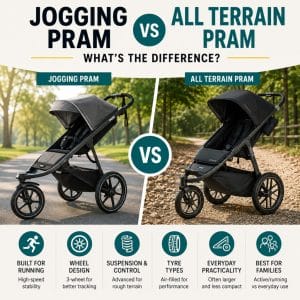
Jogging Pram vs All Terrain Pram: What’s the Difference?
Jogging Pram vs All Terrain Pram: What’s the Difference? Many parents searching for an all terrain pram eventually come across jogging prams and assume they are exactly the same thing. While both are designed to handle rougher terrain better than standard strollers, there are some important differences that can completely change which option is best
Read more...




 Facebook
 Instagram
 YouTube
 LinkedIn
Leave a comment